What Home Insurance Actually Costs in Central Florida in 2026
By Stephen Tilton, REALTOR® · August 2026 · Premium figures from the Florida Office of Insurance Regulation Property Insurance Stability Report (July 1, 2026), data as of March 31, 2026.
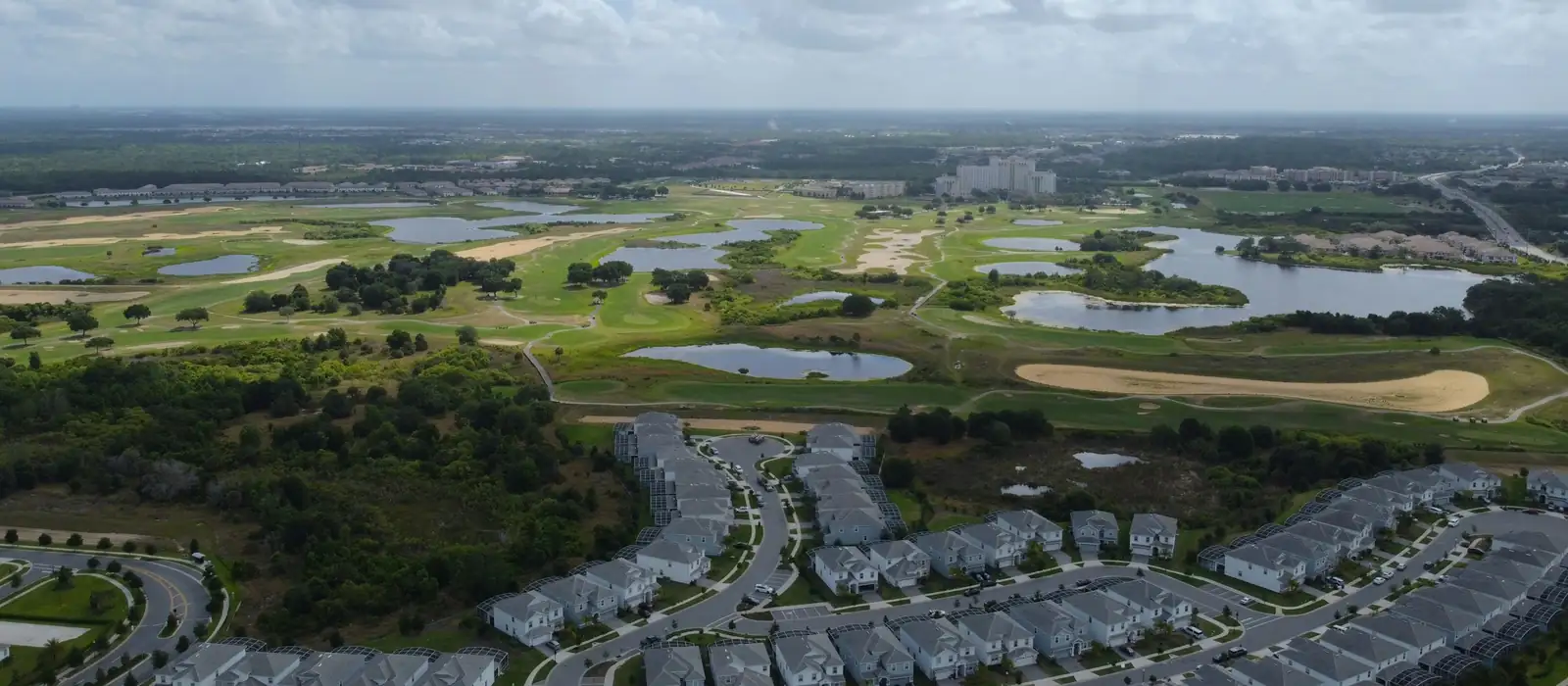
Four Corners, Central Florida · Photo: Jonah Hochstadt / Unsplash
For four straight years, the honest answer to “what will insurance cost me?” in Florida was “more than last year, and I can’t tell you how much more.” That changed in 2026. Rates are coming down, carriers are competing again — and inland Central Florida turns out to be the cheapest place in the state to insure a house.
I’m a REALTOR®, not an insurance agent, so I can’t sell you a policy or tell you which one to buy. What I can do is put real numbers in front of you before you write an offer, because insurance is now a large enough line item in Central Florida that it changes what house you can afford. Everything below traces to a primary source — mostly the state insurance regulator’s own semiannual report to the Legislature.
The quick read
Sumter County is the least expensive county in Florida to insure a home — $2,105 a year on average, out of all 67 counties. Lake is 15th cheapest at $2,650.
Orange, Seminole and Brevard sit mid-pack, around $3,500–$3,610. Still roughly half of Palm Beach, Broward or Miami-Dade.
Average premiums fell in 51 of Florida’s 67 counties between the regulator’s January and July 2026 reports.
Citizens — the state-run insurer of last resort — cut multiperil rates 8.8% statewide effective July 1, 2026, and now writes under 2% of Florida homeowners policies. Almost everyone has private options again.
Central Florida’s claim-litigation rate is 14.0% versus 27.3% in the tri-county South Florida market. Lower litigation is a real reason your premium is lower.
The single biggest lever you control is a wind mitigation inspection — roughly $100, valid five years, and it discounts the windstorm portion of your premium, which in Florida is most of it.
Flood is never included in a homeowners policy. Central Florida NFIP premiums run $591–$736 a year on average — below the national average — and the program’s authorization is set to expire September 30, 2026.
What people actually pay here
Most “average premium” numbers you find online come from quote-comparison sites, which reflect who happened to shop rather than who actually holds a policy. Florida publishes something better. Under section 627.7154, Florida Statutes, the Office of Insurance Regulation has to report to the Legislature twice a year on the state of the homeowners market — including the average premium charged in every one of the 67 counties, built from carrier filings rather than quote requests.
Here is what that report says about our market, and about the coastal counties people compare us to.
The numbers, from the regulator
Average premium actually charged, by county
Not a quote engine and not an estimate — this is total premium collected divided by policies in force, reported to the state by every admitted carrier, for policies including wind coverage. Data as of March 31, 2026.
Sumter
$2,105
Lake
$2,650
Polk
$2,767
Volusia
$2,808
Osceola
$2,940
Brevard
$3,532
Seminole
$3,545
Orange
$3,610
Pinellas
$4,063
Collier
$5,534
Miami-Dade
$5,975
Broward
$6,136
Palm Beach
$6,323
Monroe
$7,863
Central FloridaCoastal & South FloridaHomeowners average, including wind
County
Homeowners
Condo unit
Rank (low→high)
Central Florida
Sumter
$2,105
$1,025
1 of 67
Lake
$2,650
$1,092
15 of 67
Polk
$2,767
$1,149
26 of 67
Volusia
$2,808
$1,170
29 of 67
Osceola
$2,940
$1,278
35 of 67
Brevard
$3,532
$1,454
50 of 67
Seminole
$3,545
$1,202
51 of 67
Orange
$3,610
$1,295
53 of 67
For contrast — coastal & South Florida
Monroe
$7,863
$3,474
67 of 67
Palm Beach
$6,323
$2,311
66 of 67
Broward
$6,136
$1,816
65 of 67
Miami-Dade
$5,975
$2,801
64 of 67
Collier
$5,534
$2,271
62 of 67
Pinellas
$4,063
$1,399
58 of 67
Source: Florida Office of Insurance Regulation, Property Insurance Stability Report, July 1, 2026, “Average Premiums Charged for Homeowners and Condominium Unit Owners” — Market Intelligence Report data as of March 31, 2026, all 67 counties. Averages blend every home size, age, coverage limit and deductible in the county, so your own quote can land well above or below the line. FLOIR notes the average homeowners premium fell in 51 of 67 counties versus its January 2026 report.
Why inland Central Florida prices below the coast
Three things, and they compound.
1. Distance and elevation
Wind risk is the dominant rating factor in Florida, and it decays quickly as you move inland. Orlando sits roughly 43 miles from the Atlantic at about 103 feet of elevation; Leesburg is about 47 miles from the Gulf at roughly 97 feet. Miami Beach is 6 feet above sea level. Cocoa Beach is 10. That gap — not luck — is what the $3,610 in Orange County and the $7,863 in Monroe County are measuring. Much of inland Central Florida also falls outside the wind-borne debris region under the Florida Building Code, which relaxes impact-glazing requirements and shows up in both construction cost and rating.
Elevation above sea level
~103 ft
~97 ft
10 ft
6 ft
Sea level
Orlando
~43 mi from the Atlantic
Leesburg
~47 mi from the Gulf
Cocoa Beach
On the coast
Miami Beach
On the coast
2. Losses, and lawsuits
Carriers price the claims experience they expect. The regulator’s claims-lifecycle data breaks Florida into three buckets, and the split is stark: in Seminole, Orange, Lake and Osceola counties, 14.0% of closed claims were litigated. In Palm Beach, Broward and Miami-Dade it was 27.3%. Statewide, 12.1%. Litigated claims cost carriers multiples of what unlitigated claims cost — on water-damage claims closed inside 61 days, roughly $24,900 in indemnity versus $8,500 — and that difference is priced into your renewal whether or not you ever file a claim.
Seminole, Orange, Lake & Osceola
14.0%
of closed claims were litigated.
Palm Beach, Broward & Miami-Dade
27.3%
of closed claims were litigated.
Statewide
12.1%
of closed claims were litigated.
3. Carriers are cutting Central Florida harder than the coast
Heritage Property & Casualty’s 2026 filing, effective February 18, cut rates 9.6% in Seminole County, 7.0% in Osceola and 6.1% in Orange — against a statewide average of 3.3% and cuts of up to 5.0% in the tri-county coastal market. When a carrier wants growth, it discounts where it wants exposure. Right now that is here.
Elevation figures: USGS Elevation Point Query Service. Distances are approximate straight-line measurements. Litigation and claim-cost figures: FLOIR Property Insurance Stability Report, July 1, 2026 (Property Claims Lifecycle data, closed claims). Heritage rate changes: Heritage Insurance Holdings release, December 4, 2025.
Why rates are finally falling
Florida’s problem was never mainly hurricanes — it was litigation. In 2020, Florida generated about 9% of the nation’s homeowners insurance claims and roughly 79% of its homeowners insurance lawsuits. Carriers priced for that, and several simply left.
The 2022 and 2023 reform bills — SB 2-D, SB 2-A and the 2023 tort package — ended one-way attorney fee awards and assignment-of-benefits abuse, among other changes. By 2025, Florida’s share of national homeowners claims had fallen to 4.85% and its share of lawsuits to 41.29%. That is still lopsided. It is also less than half of where it was.
Florida’s share of U.S. homeowners insurance claims and lawsuits
Claims · 2020
~9%
Claims · 2025
4.85%
Lawsuits · 2020
~79%
Lawsuits · 2025
41.29%
2020 2025, after the reforms
The downstream numbers all point the same direction:
Florida domestic property insurers posted a pooled combined ratio of 83% at year-end 2025 — the lowest in more than a decade, down from 116% in 2020. Below 100 means underwriting profit.
21 new companies have been approved to write residential property in Florida since the reforms.
For policies effective 2024 or later, 44 carriers requested a rate decrease and 48 requested no change at all. The 180-day average homeowners rate request is −2.9%, against +6.6% three years ago.
Reinsurance — the insurance carriers buy for themselves, and a major driver of your premium — repriced 10–20% cheaper at the June 1, 2026 renewals.
Lawsuits served on property insurers ran 25% below the prior year over the first five months of 2026.
Worth doing this month
If you have auto-renewed the same policy since 2023, you are very likely paying a rate set in the worst part of the cycle. Re-shopping costs you an afternoon. I tell every past client the same thing: get three quotes at renewal, and make one of them from a carrier that has entered Florida in the last two years.
Combined ratio, new entrants, filing counts, litigation share and service-of-process figures: FLOIR Property Insurance Stability Report, July 1, 2026. Reinsurance pricing: Guy Carpenter, June 1, 2026 renewals; FLOIR reports at least a 10% risk-adjusted decrease across most layers.
A market can improve and still be expensive.
Stephen Tilton
What still deserves caution
A market can improve and still be expensive. Six things I would not let a buyer gloss over:
01Florida is still among the most expensive states to insure a home. Falling is not the same as cheap.
02Flood is excluded, always. Florida law requires an 18-point-type warning on your declarations page saying so, specifically noting that flood caused by hurricane winds and rain is still not covered.
03The NFIP’s authorization is currently set to expire September 30, 2026. During a lapse the program cannot issue new or renewal policies, though existing policies stay in force and a seller’s policy can generally be transferred to a buyer at closing. If you are buying in a flood zone this fall, talk to your lender and agent early.
04Citizens is phasing in a flood requirement regardless of flood zone. As of January 1, 2026 it applies to Citizens policies with dwelling coverage of $400,000 or more; on January 1, 2027 it applies to all Citizens policies, even in Zone X.
05Rebuild costs are rising faster than premiums are falling. Construction input prices were up 8.4% year over year as of May 2026, the sharpest increase since 2021. A Coverage A limit set in 2023 may no longer rebuild your house.
062026 has been a quiet hurricane season so far — NOAA’s August update calls for a 75% chance of a below-normal season, and there had been no Florida landfall as of early August. That helps the current softening. It is also a mid-season snapshot, and the season runs through November 30.
What a Florida policy actually covers
A standard HO-3 has six coverage parts, and the ones after the first are usually set as a percentage of it:
Coverage A — Dwelling. You choose it. It should equal what it costs to rebuild, which is not market value and not your purchase price.
Coverage B — Other Structures. Typically 10% of Coverage A. Detached garage, shed, fence, pool cage.
Coverage C — Personal Property. Typically 50% of Coverage A, and commonly offered from 50% to 70%.
Coverage D — Loss of Use. Typically 20% of Coverage A. What pays for somewhere to live while yours is repaired.
Coverage E — Personal Liability and Coverage F — Medical Payments. Both are limits you select.
Typical limits, as a share of Coverage A
A · Dwelling
100%
B · Other structures
10%
C · Personal property
50%
D · Loss of use
20%
C is commonly offered from 50% to 70%. E and F are limits you select.
Two Florida-specific wrinkles worth knowing. Law and ordinance coverage — which pays the extra cost of rebuilding to current code — is deemed included at 25% of your dwelling limit unless you sign a written refusal, and it matters most on older homes. And sinkholes: every Florida policy must cover “catastrophic ground cover collapse,” but that requires all four of an abrupt collapse, a visible depression, structural damage, and the building being condemned and ordered vacated. Settling or cracking alone does not qualify. Broader sinkhole coverage is a separate optional endorsement with its own 1%, 2%, 5% or 10% deductible. Central Florida sits on karst geology and Lake, Orange and Seminole all log subsidence reports — but none of our counties is in the Hernando–Pasco–Hillsborough corridor that drove Florida’s sinkhole claims crisis.
The hurricane deductible — read this before you pick one
Your hurricane deductible is separate from your regular one, and it is a percentage of your dwelling limit, not of the loss. Florida law requires insurers to offer $500, 2%, 5% and 10% options — though at dwelling limits of $250,000 and up they no longer have to offer the $500. On a $400,000 dwelling:
2%
— $8,000 out of pocket before the policy pays a dollar.
5%
— $20,000.
10%
— $40,000.
Moving from 2% to 5% will lower your premium meaningfully. It also puts $12,000 more of your own money at risk. That is a cash-reserves question, not an insurance question, and it deserves an honest answer before you sign.
Two details most people get wrong. First, the deductible window begins when the National Hurricane Center issues a hurricane warning for any part of Florida — not a watch — and ends 72 hours after the last watch or warning is terminated. Second, it applies on a calendar-year basis: once you have paid it for one hurricane, a later storm in the same calendar year applies only the remaining balance or your ordinary deductible, whichever is greater.
Sections 627.701 and 627.4025, Florida Statutes. Your declarations page must state the actual dollar amount of your hurricane deductible — check it.
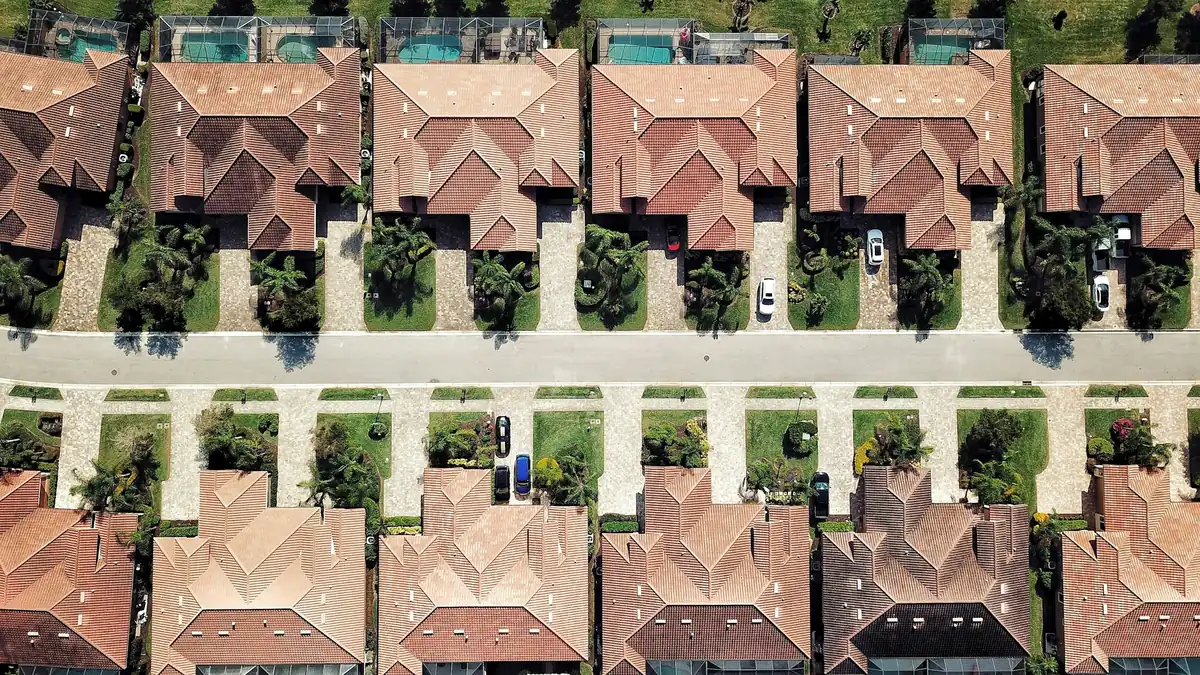
Florida rooftops from above · Fort Myers · Photo: Ameer Basheer / Unsplash
Roof age: what the law actually says
Roof age is the number one reason Central Florida sellers lose a buyer’s financing or get a renewal non-renewed. Section 627.7011(5), Florida Statutes, gives homeowners more protection here than most people realize:
An insurer may not refuse to issue or renew a homeowners policy on a home with a roof less than 15 years old solely because of the roof’s age.
For a roof 15 years or older, the insurer must let you get an inspection by an authorized inspector, at your expense, before it can require replacement as a condition of coverage.
If that inspection shows 5 or more years of useful life remaining, the insurer may not refuse to issue or renew solely because of roof age.
Roof age is measured from the last date 100% of the roof surface was built or replaced to the code in effect at the time.
Underwriting appetite is a separate question from what the law allows, and it varies by carrier. Citizens, whose rules are public, caps soft roofs — shingle and similar — at 25 years and hard roofs at 50, with an exception for documented remaining useful life. This matters enormously in Lake and Sumter County’s 55-plus communities, where a great many homes were built between the mid-1990s and the early 2000s and are on their first or second roof.
Roof age and your policy
0 yrs
15 yrs
25 yrs
50 yrs
Less than 15 years old. May not be refused or non-renewed solely because of the roof’s age.
15 years or older. You get an inspection, at your expense, before replacement can be required.
Citizens. Caps soft roofs at 25 years and hard roofs at 50, with an exception for documented remaining useful life.
For sellers
If your roof is over 15 years old, get the inspection before you list, not after an inspection objection. A report showing five-plus years of useful life is a document that keeps a deal together. Ordering it in the middle of a 10-day inspection period rarely goes well.
Wind mitigation: the highest-return hour you can spend
Florida requires carriers to give premium credits for construction features that resist wind. You document them with a Uniform Mitigation Verification Inspection Form (OIR-B1-1802), filled out by a licensed inspector. It runs on the order of $100, and it is valid for five years as long as you make no material changes to the structure.
$100
On the order of $100 for a wind mitigation inspection — valid for five years as long as you make no material changes to the structure.
Uniform Mitigation Verification Inspection Form (OIR-B1-1802)
One clarification that agency marketing routinely blurs, and that the Department of Financial Services states plainly: these credits apply only to the windstorm portion of your premium, not the whole bill. In coastal Florida that portion is most of the premium; inland it is a smaller share, so the same credit produces a smaller dollar saving here than a Tampa or Naples blog post will promise. It is still very likely worth $100.
What moves the needle, roughly in order of impact under the state’s credit schedule:
01Roof geometry. A hip roof — sloping on all four sides — earns the single largest credit. You can’t change it, but you should know whether you have it before you buy.
02Opening protection. Impact-rated windows and doors, or rated shutters on every opening. Partial protection earns much less than full.
03Roof-to-wall connection. Toe nails earn nothing; clips, single wraps and double wraps step up sharply. This is retrofittable and is often the best return on a rehab dollar.
04Roof covering meeting the Florida Building Code. Usually established by the permit for your most recent roof.
05Roof deck attachment. Nail size and spacing. Modest alone, large in combination.
06Secondary water resistance — a sealed roof deck. Smallest of the six, and usually only practical at the time of a re-roof.
Two timing notes
Inspections performed on or after April 1, 2026 must use the revised 04/26 version of the form, which adds roof slope, a wind-speed region designation and FORTIFIED certificates. Separately, the state’s underlying credit tables have not yet been re-adopted following the 2024 wind-loss study — so a new form does not automatically mean a bigger credit. And if you re-roof, order a fresh inspection right away rather than waiting for renewal.
Flood: cheaper here than most of the country
Homeowners insurance excludes flood. You buy it separately, through the NFIP or a private carrier. The good news for Central Florida is that this is one of the least expensive places in Florida to do it. Average NFIP premiums by county run about $591 in Sumter, $640 in Orange, $644 in Polk, $656 in Osceola, $717 in Lake and $736 in Seminole — all below both the Florida average of roughly $1,363 and the national average of about $1,290.
Average NFIP flood premium, per year
Sumter
$591
Orange
$640
Polk
$644
Osceola
$656
Lake
$717
Seminole
$736
Florida average
~$1,363
National average
~$1,290
Federally backed mortgages require flood insurance only in a Special Flood Hazard Area — the A and V zones. Most of Central Florida is Zone X, so most buyers here are not required to carry it. That is exactly why it gets skipped, and exactly why it is worth a second thought: Orange County’s own floodplain office reports that more than 25% of flood claims come from structures outside the 100-year floodplain. A few hundred dollars a year against an uncovered total loss is not a close call for most households.
25%+
More than 25% of flood claims come from structures outside the 100-year floodplain, according to Orange County’s own floodplain office.
One local bonus worth asking about: Orange County participates in FEMA’s Community Rating System at Class 5, which earns residents a 25% discount on NFIP premiums. Ask your agent whether your specific community carries a CRS discount — it is not automatic across the region.
Eight things that actually lower your premium
01Get a wind mitigation inspection if you don’t have a current one. About $100, valid five years, and it is the only item on this list that costs almost nothing and can pay back immediately.
02Shop at least three carriers at renewal — and make one of them a company that entered Florida recently. Twenty-one have. New entrants price for growth.
03Check whether your Coverage A is still right. With construction costs up 8.4% year over year, a limit set in 2023 may be short. Being underinsured is a worse outcome than being slightly overinsured.
04Reconsider your hurricane deductible — deliberately. Moving from 2% to 5% on a $400,000 home cuts premium and adds $12,000 of personal exposure. Only do it if that $20,000 is genuinely liquid.
05Replace a roof that is near the end of its life before you shop, not after a non-renewal notice. And if the roof is over 15 years old, use your statutory right to an inspection first.
06Bundle home and auto if the combined number actually wins. Auto rates in Florida have been falling too. Compare the pair, not each alone.
07Ask specifically which credits you are and aren’t receiving. Opening protection, roof-to-wall, monitored alarm, claims-free, and the law-and-ordinance election. Credits get dropped in carrier migrations more often than you would think.
08If you’re still with Citizens, look at the private market. Citizens now writes about 1% of Florida homeowners multiperil policies. It was designed to be the last resort, and for most Central Florida homes it no longer needs to be the only one.
Common questions
How much is homeowners insurance in Central Florida in 2026?
It depends heavily on county. As of March 31, 2026, average premiums actually charged for homeowners policies including wind coverage were $2,105 in Sumter County, $2,650 in Lake, $2,767 in Polk, $2,808 in Volusia, $2,940 in Osceola, $3,532 in Brevard, $3,545 in Seminole and $3,610 in Orange. Those are county-wide averages across all home sizes, ages and coverage limits, reported by carriers to the Florida Office of Insurance Regulation.
Are Florida home insurance rates going up or down in 2026?
Down, for the first time in several years. The Florida Office of Insurance Regulation reports that average homeowners premiums fell in 51 of the state's 67 counties between its January and July 2026 reports. Citizens cut multiperil rates 8.8% statewide effective July 1, 2026, and for policies effective 2024 or later, 44 carriers requested rate decreases while 48 requested no change.
Why is insurance cheaper in Central Florida than in South Florida or on the coast?
Wind exposure and litigation. Inland Central Florida sits 40 to 60 miles from either coast at roughly 60 to 115 feet of elevation, versus single-digit elevations on the coast, and much of it falls outside the Florida Building Code's wind-borne debris region. Claim litigation also runs far lower: 14.0% of closed claims were litigated in Seminole, Orange, Lake and Osceola counties, against 27.3% in Palm Beach, Broward and Miami-Dade.
Does homeowners insurance cover flood damage in Florida?
No. Flood is excluded from every standard homeowners policy, and Florida law requires an 18-point-type notice on your declarations page saying so — including that flood caused by hurricane wind and rain is still not covered. Flood coverage is bought separately through the NFIP or a private carrier. Average NFIP premiums in Central Florida counties run roughly $591 to $736 a year.
Is a wind mitigation inspection worth it?
For most Central Florida homeowners, yes. It costs roughly $100, is valid for five years, and documents construction features that carriers are required to credit. One important caveat: the credits apply only to the windstorm portion of your premium, not the entire bill, so the dollar savings inland are smaller than coastal marketing suggests.
Can an insurer drop me because my roof is old?
Not solely because of age, within limits. Under section 627.7011(5), Florida Statutes, an insurer may not refuse to issue or renew a policy on a roof less than 15 years old solely because of its age. For a roof 15 years or older, the insurer must allow you to obtain an inspection by an authorized inspector at your expense before requiring replacement, and may not refuse solely on roof age if that inspection shows five or more years of useful life remaining.
What does a 2% hurricane deductible actually cost me?
It is 2% of your dwelling limit, not 2% of the loss. On a $400,000 dwelling that is $8,000 out of pocket before the policy pays anything. A 5% deductible is $20,000 and 10% is $40,000. The deductible window begins when the National Hurricane Center issues a hurricane warning for any part of Florida and ends 72 hours after the last watch or warning is terminated, and it applies on a calendar-year basis.
Should I shop my policy if my rate went down at renewal?
Probably still worth it. A decrease means your carrier repriced its book; it does not mean your carrier is now the best price for your specific house. Twenty-one companies have been approved to write residential property in Florida since the reforms, and new entrants tend to price aggressively for growth.
A note on what this is and isn’t. Stephen Tilton is a licensed Florida real estate sales associate, not a licensed insurance agent, and nothing here is insurance, legal or tax advice or a recommendation of any policy, carrier or coverage limit. County premium figures are averages across every policy in force in that county and are not quotes — your own premium depends on the specific home, its age and construction, your coverage limits, deductibles, claims history and carrier. Statutory summaries are simplified; read the statute and your policy. Figures were current as of August 2026 and this market is moving quickly — verify anything you plan to rely on. Primary sources: Florida Office of Insurance Regulation Property Insurance Stability Report (July 1, 2026); Citizens Property Insurance Corporation; Florida Statutes ss. 627.701, 627.4025, 627.706 and 627.7011; Florida Department of Financial Services; FEMA/NFIP county data via Insurify; Orange County Floodplain Management; Associated General Contractors of America; NOAA; Guy Carpenter.
Work with Stephen
Run the real number before you write the offer.
Insurance, taxes and HOA dues decide what a house actually costs you every month — and they vary enormously between two homes at the same price. Stephen will pull the real figures on any Central Florida property you’re considering.