TiltonSells
Buy · Sell · Manage
Central Florida · Solar Home Buyers

Buying a house with solar panels in Central Florida? Run the numbers before you write the offer.

The panels on that roof are either an asset you are getting for nearly nothing or a 20 year contract you are about to inherit. I'm Stephen Tilton, the agent who works solar homes on both sides of the deal. This page tells you which one you are looking at, with a calculator built on published Florida numbers.

Selling a solar home instead? Read the seller guide.

150+
Transactions closed
$50M+
Volume sold
4.8★
On Zillow · 18 reviews
10+
Years selling
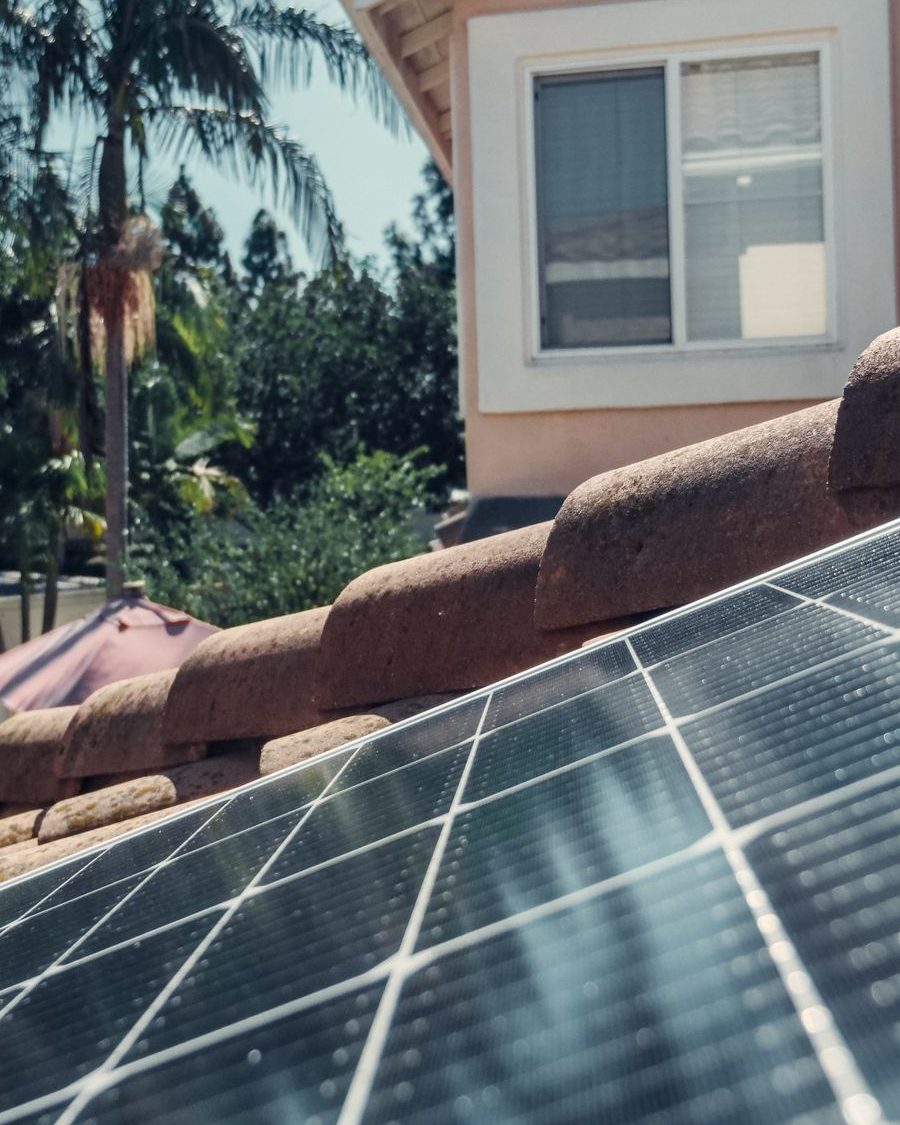
Rooftop solar panels on a tile roof home with palm trees
Central Florida
TiltonSells
Solar Buyer Guide
Run the numbers
The surprise

Three things that turn a solar home into a bad deal.

Most buyers learn what the panels really are after the inspection period, when walking away costs money. Every one of these is avoidable if you ask in the first 48 hours.

01 / The contract

"The panels belong to a leasing company."

The listing said solar. It did not say the agreement has 17 years left and escalates every year. You find out when the transfer paperwork lands in your inbox a week before closing, with a credit check attached.

02 / The lien

"Title found a UCC 1 on the panels."

A solar loan is usually secured by a fixture filing recorded against the property. If nobody negotiated who pays it off, your lender finds it in the title search and the file stops moving until someone does.

03 / The value

"The appraiser gave the solar zero."

You paid extra for a $30,000 system. The appraisal gave it nothing, because it was leased, or because nobody supplied the paperwork. Now you are covering the gap in cash at the closing table.

Each of these is a question, not a crisis, if it gets asked before the offer.
Talk to Stephen
About

The agent who works solar from both sides.

I built my solar practice on the listing side, getting sellers through UCC 1 releases, lease transfers and appraisals that had been killing their deals. Do that enough times and you learn exactly where buyers get hurt, because you were sitting across the table when it happened.

So on the buyer side I read the agreement before we write, I know which solar lenders allow an assumption and which ones demand payoff, I know what a title company needs to clear a fixture filing, and I know what an appraiser needs to give an owned system real value. I'm a REALTOR® with FLA Real Estate Services, not a lender or an electrician, so I don't sell loans or fix inverters. What I do is run the numbers and tell you plainly whether the system helps or hurts the house in front of you.

Full track record
Owned, loan, lease or PPA

What you are actually buying.

The word solar on a listing covers four very different things. The ownership structure decides what transfers, what it costs you, and whether the appraiser can count it.

01

Owned outright

The seller paid cash, or paid the loan off, and the panels convey with the house the same way the roof does. Best case for a buyer: no payment, the production is yours, and with documentation an appraiser can give it value. Confirm it with a UCC search, not the seller's word.

02

Solar loan

The seller still owes money and the lender holds a UCC 1 fixture filing. Two clean outcomes: the seller pays it off at closing and you treat the system as owned, or you assume the loan with the lender's approval at their balance and rate. The bad outcome is nobody dealing with it.

03

Lease

A third party owns the equipment. You take over a fixed monthly payment, usually with an annual escalator, for whatever is left of a 20 to 25 year term. Fannie Mae will not let the appraiser count it, and the payment lands in your debt ratio. It can still be a fair deal if the payment is well under what the power is worth.

04

Power purchase agreement

Like a lease, except you pay a set rate for every kilowatt hour the system produces, whether you use it or not, and that rate usually climbs each year. It only wins if the PPA rate stays under your utility's rate for the whole term. The calculator below checks exactly that.

Not legal, tax or lending advice. Payoffs, assumptions, transfers and UCC releases are handled with the title company, the solar lender or leasing company, and your mortgage lender.

The calculator

Florida solar savings calculator for buyers.

Enter the bill the house runs today, the utility, the system size, and how the solar is owned. The calculator estimates production for Central Florida sun, what it saves, and whether the system is helping or hurting the deal. Every assumption is listed below it, with the source.

Ask the seller for 12 months of bills and use the average. Dollars, before solar if they have it.
From the permit, the installer contract or the monitoring app. A typical Central Florida home system is 6 to 10 kW.
The part of the price that is really for the panels. Enter 0 if the seller is not asking extra for them.
0%2.5% a year6%
Florida residential prices rose about 3.3 percent a year over the last ten years (EIA). The default sits below that on purpose.
Estimated production, year one
 
 
Year one, net of any payments
 
 
Simple payback
 
years to recover what you pay for it
10 year net savings
 
after payments and any premium
25 year net savings
 
panels degrade half a percent a year
Plain English verdict


Electricity math only. It does not price the roof, insurance, maintenance, an inverter replacement, or what the system does to the appraisal. Those are below.

How this is calculated
Every number, where it comes from, and what is left out.
+

Your usage. The calculator subtracts the utility's fixed customer charge from your bill, then divides by the energy portion of the rate to estimate kilowatt hours per month. The customer charge is never offset by solar, which is why a solar home still gets a bill.

Utility rates. Base figures are the residential bill for 1,000 kWh and the customer charge in the Florida Public Service Commission's Comparative Rate Statistics as of December 31, 2025, excluding local taxes and franchise fees, then adjusted for changes the utility announced for 2026:

  • Duke Energy Florida: $148.34 for 1,000 kWh, $30.00 customer charge. FPSC Dec 31, 2025 bill $184.96, plus the $7.54 January 2026 increase and the $44.16 March 2026 decrease Duke announced (Duke Energy release, Sept 4, 2025). The temporary summer credit ended in October 2026.
  • OUC (Orlando Utilities Commission): $134.00 for 1,000 kWh, $18.50 customer charge. FPSC Dec 31, 2025 bill $134.00. OUC proposed flat electric rates for fiscal 2027 (Mast Orlando, July 8, 2026).
  • FPL (Florida Power and Light): $133.18 for 1,000 kWh, $25.00 customer charge. FPSC Dec 31, 2025 bill $130.68, plus the $2.50 increase for 2026 under the rate agreement the PSC approved Nov 20, 2025 (FPL newsroom).
  • TECO (Tampa Electric): $156.48 for 1,000 kWh, $12.90 customer charge. TECO's Sept 3, 2026 release says a 1,000 kWh bill would be $154.13 in January 2027 after a 1.5 percent cut, which puts today's bill at about $156.48.
  • Kissimmee Utility Authority: $108.13 for 1,000 kWh, $10.17 customer charge. FPSC Dec 31, 2025 bill $108.13 (rate sourced by the PSC from KUA's website).
  • Other Florida utility: $151.00 for 1,000 kWh, $20.00 customer charge. EIA statewide residential average for Florida, 15.1 cents per kWh (June 2026), with a representative $20 customer charge, which sits between the five utilities above.

Production. 1,400 kWh per kW per year. NREL's PVWatts estimates about 1,490 kWh per kW for Orlando on a due south roof at 20 degrees with its default 14.08 percent losses. Real roofs face east or west, carry some shade, and run a little dirty, so the calculator trims that by about six percent. Panels lose 0.5 percent of output a year, the median rate in NREL's review of nearly 2,000 field measurements (Jordan and Kurtz, Progress in Photovoltaics, 2013).

What a kilowatt hour is worth. Full retail credit for every kilowatt hour up to your own annual usage, which is how Florida's net metering rule works for Duke, FPL and TECO. OUC and KUA run their own programs with similar monthly netting; check the current terms. Production above your usage is given no value, because the yearly true up pays only a small avoided cost rate and a buyer should not pay for surplus.

Rate escalation. Default 2.5 percent a year. Florida residential prices rose 38.9 percent from June 2016 to June 2026 in EIA data, about 3.3 percent a year, so the default is below the trend. Move the slider to see how much the answer depends on it.

No tax credit. The federal residential clean energy credit is not allowed for any expenditure after December 31, 2025 (IRS), and a buyer of an existing system never qualified for it anyway. No state rebate is assumed.

Loans, leases and PPAs. Payments come straight from the figures you enter, for the years you enter, with the contract's escalator compounded annually. The lease and PPA defaults are placeholders; the agreement governs. A PPA is charged on everything the system produces, including surplus you get nothing for.

Left out on purpose. Insurance premium changes, maintenance, an inverter replacement (string inverters often need one inside 25 years), the cost of removing and reinstalling panels for a reroof, property taxes (Florida exempts residential solar from assessed value under section 193.624), the time value of money, and any effect on the appraisal. Simple payback is the first year cumulative net savings cover what you paid; it ignores interest.

Estimates for comparison only, not a quote or a guarantee of production or savings. Figures current as of October 2026; utility rates change every year and these will be updated when they do.

Keep these numbers

Send me these results.

I'll email you what you entered and what it came to, and if you give me the address I'll pull the permit, the UCC record and the roof age and tell you what I see. No charge, no pressure.

Stephen Tilton · FLA Real Estate Services · Lic. SL3349145. By submitting you agree to be contacted by Tilton Sells. We never share your info. Privacy

Before you write

What to check before you make an offer on a solar home.

Seven questions, in the order I ask them. Most take a phone call or a records search, and all of them belong inside your inspection period, not after it.

01
Who owns the panels
Ask for the actual agreement, not a description of it. Owned, loan, lease or PPA changes every answer below, and sellers are often wrong about which one they have.
02
The UCC search
Have the title company search the county official records for a UCC 1 fixture filing against the property, and search the Florida Secured Transaction Registry under the seller's name. A filing means someone has a claim on the equipment, whatever the listing says.
03
Production history
Twelve months from the monitoring app (Enphase, SolarEdge, Tesla and the rest all have one) next to twelve months of utility bills. Compare it to the calculator above. If real production is well under the estimate, find out why before you pay for the system: shade, a failed inverter, or a dead string of panels.
04
Payoff or transfer terms, in writing
For a loan, a payoff letter from the solar lender dated inside 30 days and a seller commitment in the contract to pay it at closing. For a lease or PPA, the transfer requirements, the buyout figure, and who pays the transfer fee. Verbal assurances are worth nothing at the closing table.
05
Roof age and the reroof plan
Panels are rated for 25 years. A Central Florida shingle roof often is not. Get the roof's age and permit date, and if it is more than ten or twelve years old, get a written quote to remove and reinstall the panels at reroof time and negotiate for it now. Roof age also drives insurance; see what Central Florida home insurance actually costs.
06
Permits and interconnection
Closed building and electrical permits from the county or city, and the utility's interconnection approval in the seller's name. Unpermitted solar is a problem for your lender, your insurer and the utility, and you will be the one applying to move the net metering agreement into your name after closing.
07
Warranties and who services it
Panel, inverter and workmanship warranties, and whether they transfer. Then the question that matters most after the run of installer bankruptcies: who answers the phone today when the inverter throws an error. If the installer is gone, know that before you own the problem.
Appraisal and price

Is a home with solar worth more?

Sometimes. It depends entirely on who owns the panels and what paperwork exists, which is a different answer than the listing agent will give you.

What drives home prices over the long run

What the lender's rulebook says. Fannie Mae's Selling Guide, which most conventional loans follow, is blunt about leased and PPA systems: their value cannot be included in the appraised value or in the loan to value calculation, and the monthly payment usually counts in your debt ratio. For panels financed with a UCC 1 filing, the appraiser may consider them only if they cannot be repossessed, and a filing that sits ahead of your mortgage has to be subordinated. Owned panels are treated like any other improvement.

What that means for your offer. Never pay a premium for a leased or PPA system. You are not buying it; you are agreeing to rent it. For an owned system, pay for documented production, not for the installer's original invoice. A seven kilowatt system that produced 9,800 kWh last year has a value you can defend with the calculator above. A system with no monitoring data and no permit has a value of zero until someone proves otherwise, and that is also what the appraiser will say.

What the appraiser needs from you. System size and age, the installer and the permit, the inverter type, the production history, the warranties, and proof of ownership. Hand that packet over before the inspection and an owned system has a real chance of being counted. Hand over nothing and it will be a line in the remarks that says solar panels, contributory value not determined.

Property taxes. Florida exempts residential renewable energy devices from assessed value under section 193.624, so an owned system will not raise your tax bill. Homestead and the Save Our Homes cap work the same way they would on any other house.

The honest range. National studies have found buyers paying more for owned solar homes, and every one of them is an average across markets with different electricity prices and different rules. Central Florida rates sit near the national average, net metering still pays retail, and sun is not the constraint. What moves the number here is ownership and documentation. Get those two right and the panels help the price; get them wrong and they are the reason the deal falls apart in week three.

Solar buyer questions

Asked on every solar purchase.

Straight answers to the questions buyers bring me about leases, liens, appraisals, insurance, roofs and what happens when the installer disappears.

Can a solar lease transfer to me when I buy the house?

+

Usually, yes. Most residential solar leases and power purchase agreements allow a transfer to the buyer, but it is the leasing company's decision, not the seller's. Expect a credit check (Sunrun describes it as a soft inquiry), a transfer form, and a few weeks of lead time. Tesla says it transfers its agreements to the new owner about 98 percent of the time and that the home sale process should start as soon as you are under contract. Get the agreement, the remaining term, the monthly payment and the escalator in writing before you write the offer, and make the transfer a condition of the contract.

What is a UCC 1 filing on solar panels, and will it stop my closing?

+

A UCC 1 is a financing statement a solar lender or leasing company records to claim the panels as collateral. In Florida it is usually recorded in the county's official records as a fixture filing, so the title company will find it. It does not stop a closing by itself, but it must be dealt with: either the seller pays the loan off and the lender files a termination, you formally assume the loan, or the leasing company issues a release or subordination for your lender. The deals that blow up are the ones where nobody asked until the week of closing.

Do solar panels increase the appraised value of a house?

+

Only when they are owned. Fannie Mae's Selling Guide says the value of leased or power purchase agreement panels cannot be included in the appraised value or the loan to value ratio. Panels that are owned outright, or financed in a way that means they cannot be repossessed, can be considered by the appraiser, and in practice that depends on the documentation you hand over: system size, installer invoice, production history and warranties. Florida also exempts residential solar from the assessed value for property taxes under section 193.624, so the panels will not raise your tax bill either way.

Does my homeowners insurance cover rooftop solar panels in Florida?

+

Panels attached to the roof are normally treated as part of the dwelling under Coverage A, and your hurricane deductible applies to them like the rest of the roof. You must tell the carrier the system exists, and a few Florida carriers will not write a home with solar at all, so get the quote during your inspection period, not after. If the system is leased, the lease usually says the leasing company insures the equipment and is responsible for repairs. Read my Central Florida insurance article for the roof age and wind mitigation rules that drive the premium.

What if the roof needs to be replaced while the panels are up there?

+

The panels have to come off and go back on, and that is a separate bill from the roof itself. Ask the age and permit date of the roof during inspection. A shingle roof in Central Florida often will not outlast a 25 year solar system, so if the roof is more than ten or twelve years old, price the reroof and the panel removal and reinstall now, and negotiate for it. Insurers care about roof age too, which affects whether you can get a policy at all.

What happens if the solar company goes out of business?

+

It has been happening a lot. SunPower and Titan Solar went under in 2024, Sunnova and Mosaic filed in June 2025, and more followed. A lease or PPA is an asset the bankruptcy estate sells, so your contract survives and you keep paying whoever buys it. Manufacturer warranties on the panels and inverter usually stay valid, but the installer's workmanship warranty, which covers the roof penetrations and wiring, is usually gone. Before closing, find out who currently services the system and who answers the phone when the inverter fails.

Can I assume the seller's solar loan?

+

Some solar lenders allow an assumption, with their own credit approval, at the original rate and remaining balance. Others require payoff at sale. The cleaner path in most deals is for the seller to pay the loan off at closing from their proceeds, which converts the system to owned for you. If you are being asked to assume a loan, treat the balance as part of the price you are paying for the house and run it through the calculator on this page.

Do I get the federal solar tax credit if I buy a house that already has panels?

+

No. The residential clean energy credit went to the person who paid for the original installation, and the IRS confirms the credit is not allowed for any expenditure made after December 31, 2025. The calculator on this page assumes no tax credit for that reason. If a listing or an installer tells you otherwise, ask a tax professional before you count on it.

Does the utility account for the solar have to be in my name?

+

Yes. The seller's net metering interconnection agreement with Duke, OUC, FPL, TECO or KUA does not transfer automatically. After closing you apply to the utility to put the interconnection in your name so the panels keep offsetting your bill. Ask the seller for a copy of the interconnection approval and the closed building and electrical permits so the utility has nothing to question.

A note on what this is and isn't. Stephen Tilton is a licensed Florida real estate sales associate with FLA Real Estate Services, not a lender, electrician, insurance agent, tax professional or attorney, and nothing on this page is lending, electrical, insurance, tax or legal advice. The calculator produces estimates from published averages and the figures you enter; it is not a quote, and actual production and savings depend on the roof, the equipment, the weather, your usage and the utility's tariff at the time. Loan assumptions, lease transfers, UCC releases and appraisals are governed by the lender, the leasing company, the title company and the appraiser, not by this page. Figures were current as of October 2026 and will change. Primary sources: Florida Public Service Commission Comparative Rate Statistics (December 31, 2025); Duke Energy Florida, FPL, Tampa Electric and OUC rate announcements for 2026; U.S. Energy Information Administration; NREL PVWatts; Jordan and Kurtz, Progress in Photovoltaics (2013); Fannie Mae Selling Guide (Special Property Eligibility Considerations); IRS guidance on the 2025 federal tax law; Florida Statutes section 193.624; the Florida Public Service Commission's net metering rule.

Reviews

What buyers say.

4.8 average across 18 reviews on Zillow.

★★★★★
Stephen did a great job finding houses targeted to our location and price preferences.
Ryan Foxworth · Bought in Orlando, FL · Zillow, 2020 · verified on Zillow
★★★★★
After I had been trying to purchase a rental property for months, I was blown away by Stephen's expertise. He holds a profound understanding of the housing market.
duttona1 · Zillow, 2019 · verified on Zillow
★★★★★
We are first time homebuyers and Stephen made everything…
mac colgan2017 · Bought in Umatilla, FL · Zillow, 2019 · verified on Zillow
★★★★★
Stephen is highly professional. He is easily approachable. He found me my dream home.
lmpq51360 · Bought in Weeki Wachee, FL · Zillow, 2017 · verified on Zillow
The decision

Two ways to buy a solar home.

You are going to make an offer. The only question is what you know when you make it.

Path A

Find out at closing

Take the listing's word for it, write the offer, and learn what the panels are when the lease transfer or the UCC 1 shows up in week three.

  • A 20 year contract you did not price
  • A lien your lender finds before you do
  • A premium the appraiser will not support
  • A roof and an inverter you now own
Path B

Know before you write

The agreement read, the UCC searched, the production checked and the number run before the offer goes in, so the panels are a term you negotiated instead of a surprise you absorbed.

  • Ownership confirmed from the records, not the remarks
  • Payoff, assumption or transfer written into the contract
  • Documentation packet ready for the appraiser
  • Roof, insurance and warranty answered in the inspection period
Choose Path B
Selling a solar home? That side has its own guide. What home insurance actually costs here, county by county. No solar? Every purchase gets the same standard.
Before you write the offer

Know what the panels are before you're under contract.

Send me the address. I'll pull the permit, the UCC record and the roof age, read the solar agreement if there is one, and tell you plainly whether the system helps or hurts the deal. Twenty minutes, no obligation.

Selling a solar home? The seller guide is here.

Have Stephen check the solar

Your calculator inputs come along with this, so I can start from your numbers.

Stephen Tilton · FLA Real Estate Services · Lic. SL3349145

By submitting you agree to be contacted by Tilton Sells. We never share your info. Privacy