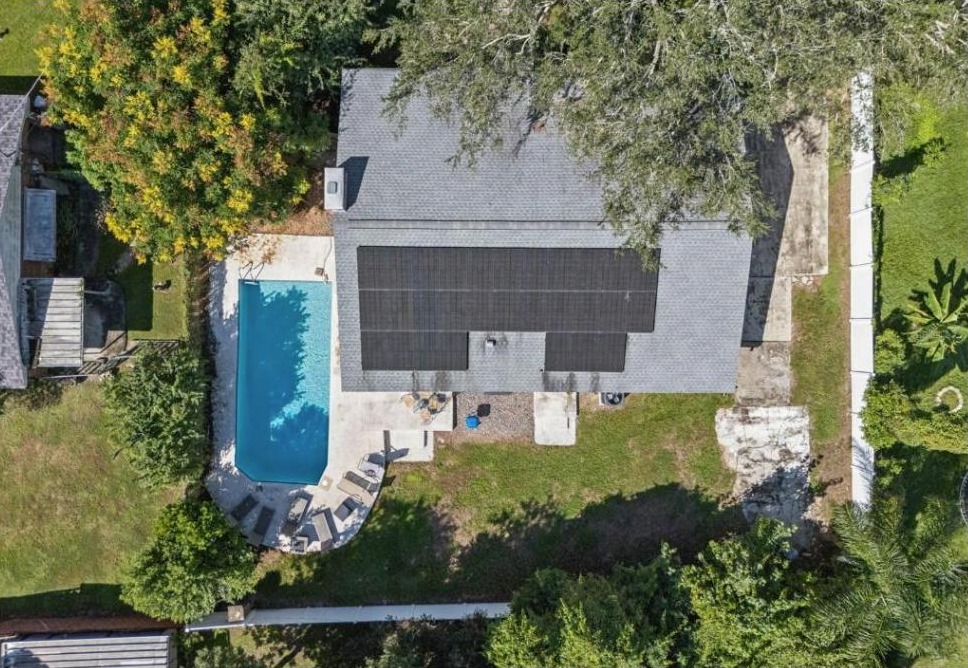
Most agents fold a paid off solar system into the house price, and the buyer gets it for free. I price the system on its own line in the contract, document what it produces, and make sure the buyer, the lender and the appraiser all see the number. My floor for a working, paid off system is $10,000.
Still paying on the panels? Read how I handle solar loans, leases and UCC filings.
If you still owe on the panels, the sale is about the loan: who pays it off, whether the buyer can assume it, how the UCC filing gets released. If the panels are paid off, there is no loan to solve. There is only value to capture, and that is where most sellers leave money behind.
The lending rules favor you. Fannie Mae's guide says panels owned outright can contribute to appraised value under standard appraisal rules, while leased panels and power purchase agreements cannot be counted at all. The research favors you too. Berkeley Lab's study of 22,822 home sales across eight states, Florida among them, found buyers paid about $4 per watt for an owned system, roughly $15,000 for a typical 3.6 kW array. Zillow's 2019 analysis put the national premium at 4.1 percent.
The catch is that an appraiser is not allowed to add value dollar for dollar from your installation invoice. The value has to be visible in the market and in the paperwork. That is the part I handle.
May contribute to appraised value under standard appraisal rules.
Counted only if the panels cannot be repossessed; the loan goes in the buyer's debt ratio.
Personal property. Not included in appraised value at all.
Fannie Mae Selling Guide B2-3-04 and B4-1.3-05.
The system is priced, documented and disclosed. It is never a side agreement.
Installer contract and permit, equipment list, the warranty, the utility interconnection and net metering agreement, and 12 months of production from the inverter app. If you do not have the production history, I pull it from the monitoring account with you.
I value the system on size, age, production and what it would cost to install today. My floor for a working, paid off system is $10,000. Larger and newer systems are priced above it.
The system is written into the purchase contract as its own priced line, conveyed with the home. It is in the contract, on the settlement statement and in front of the buyer's lender. Never a side agreement.
They get the system file and the production record so the number has support. For a buyer with a mortgage, the system price is part of the purchase price the appraisal has to carry, and I package it so it does.
The system price shows on your settlement statement as its own figure. You see exactly what the panels earned you.
It is the least I will ask for a working, paid off system on any listing I take. It is not a guarantee of what a buyer will pay, and I will tell you before we list if your system, your roof or your buyer pool makes the floor unrealistic.
What it does guarantee is that your panels get priced, documented and negotiated instead of given away.
Florida does not add owned solar to your assessed value for property taxes (section 193.624), so the buyer gets the production without a higher tax bill. That is a selling point and I use it.
A homeowners association cannot prohibit solar on your roof (section 163.04), which removes a buyer objection before it is raised.
Net metering transfers to the new owner through the utility. Duke, OUC, FPL, TECO and KUA each have their own form, and I handle it so the buyer's first bill is right.
Usually, yes, when they are owned and documented. Fannie Mae allows owned panels to contribute to appraised value, and national studies have found premiums of about $4 per watt and about 4 percent of sale price. What the panels actually earn depends on size, age, production and the buyer.
Because a higher list price with no explanation gets negotiated down, and an appraiser cannot add value from an invoice. A separate priced line, backed by the production record, gives the buyer, the lender and the appraiser one number to support.
The system price is part of the purchase price and is disclosed to the lender like everything else in the contract. The appraisal has to support the total, which is why the system file and the production history matter more than the invoice.
I will tell you before we list. The floor applies to a working system. An older system with a weak production record is priced on what it produces, not on what it cost.
Not legal, tax or appraisal advice. Contract language is coordinated with the title company and closing counsel. Results depend on the system, the buyer's financing and the market.
Send me the installer contract and a screenshot of your production app. I will tell you what the system should sell for and how I would write it into the contract. No cost, no obligation.